Camping in Iceland

Iceland, land of fire and ice, offers breathtaking landscapes that attract travelers from around the world. For those looking to fully immerse themselves in Icelandic nature, camping is an attractive option, even in winter.

1

What are the options for camping in Iceland?
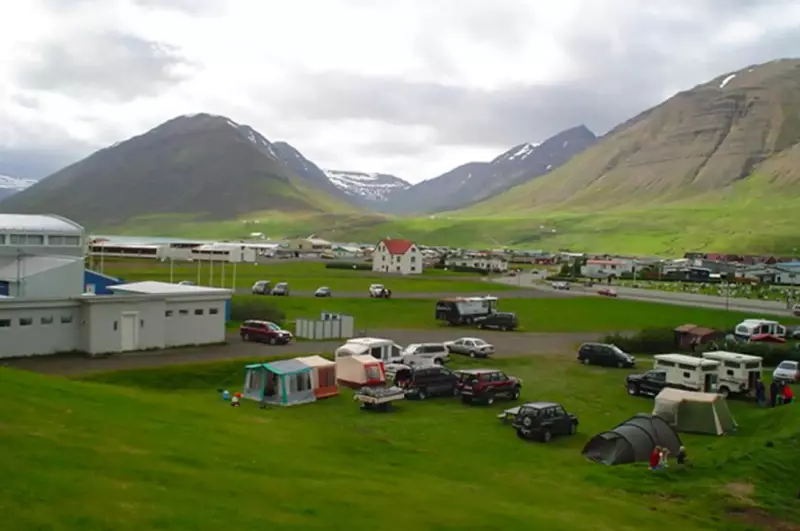
A campsite in Iceland

A campsite in Iceland

🚗 Sleeping in your vehicle
It's the most economical solution and the one that will offer you the most freedom.
You can arrive at any time, there will always be a place to park your vehicle.
🚐 Renting a campervan or a motorhome
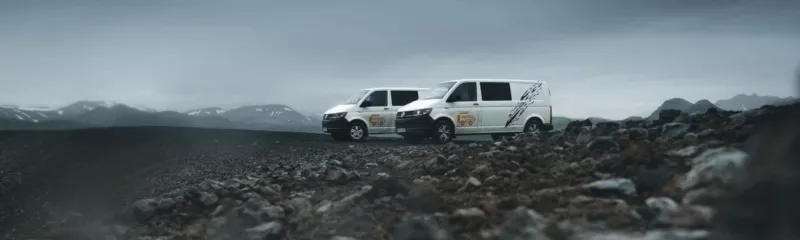
Campervans are very popular in Iceland, as it is generally less expensive than booking nights in hotels during the high season without sacrificing a comfortable night's sleep.
These vehicles are equipped to accommodate a mattress, a kitchen area, and toilets in high-end versions.
Unlike other options, the campervan allows for camping even in winter.
The "Webasto" option allows you to benefit from the heat of a heater during cold Icelandic nights.
🚙 Renting a car with a roof-top tent
Cars with an integrated tent cost less than a campervan or a motorhome.
This option avoids the daily chore of setting up and taking down the tent.
Sleeping in a tent
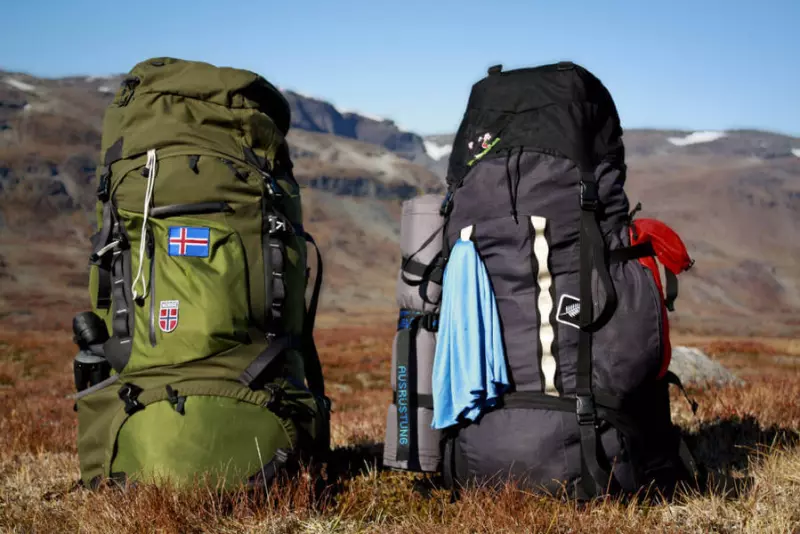
You can bring your own camping equipment to Iceland, but ensure your tent is robust and waterproof enough to withstand a night in the rain and strong winds.
Plan for a good sleeping bag, as temperatures can drop below 10 degrees even in summer.
Our recommendation: Is this your first time camping? We recommend opting for a campervan and planning a few nights in conventional accommodation.
2

The advantages of camping

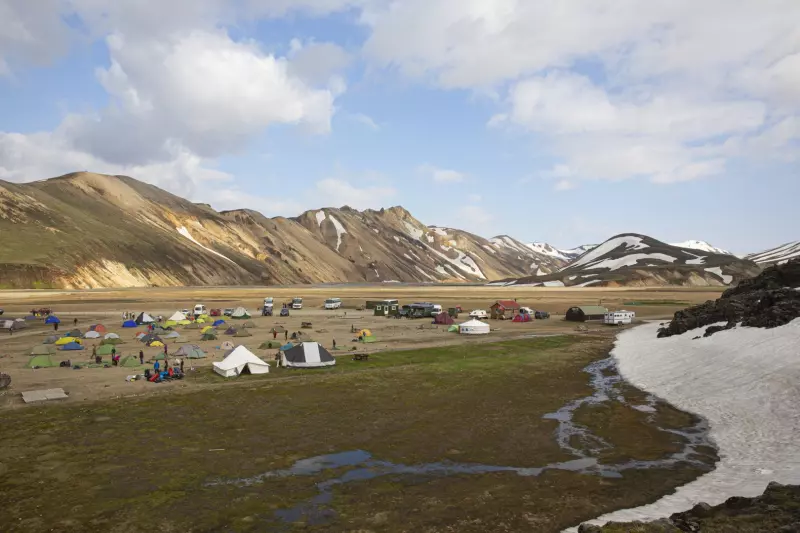
A campsite in the Highlands

A campsite in the Highlands

🌳 Proximity to Nature

One of the main advantages of camping in Iceland is the direct access to remarkable natural sites. Campers can wake up with a view of glaciers, volcanoes, lava fields, and waterfalls. This allows for total immersion in Icelandic nature.  

💶 Savings
Accommodation costs can be high, especially during the peak tourist season. Camping allows you to reduce these costs, enabling you to enjoy, for example, numerous activities like whale watching or a glacier hike.
Read also | The Best Activities to Do in Iceland
Time Saving

The prolonged daylight during the summer months offers another reason to camp in Iceland. With almost 24 hours of daylight, campers can enjoy long days for exploring and not feel rushed by the obligation to check in to hotels before 7 p.m.

💬 Encounters

Finally, camping in Iceland encourages meeting other travelers and   discovering different cultures. It's also an opportunity to share your discoveries and get advice from other   travelers on sites to visit.

3

Where to book your car, campervan, or motorhome?

Are you planning to travel by:
🚌 Public Transport
This mode of travel requires time and good planning. Some sites are not accessible, and there is often only one bus per day in the best-case scenario. Lines and timetables can be consulted on the Strateo website.
Read also | How to get to Reykjavik from Keflavik Airport
🚗 Car / SUV / 4x4
We have prepared a guide on car rental in Iceland for you. You will discover the pitfalls to avoid, help with choosing a rental company and insurance, and lots of other useful information.
🚐 Campervan or Motorhome
Consult our guide on renting a campervan or a motorhome. It covers all subjects from price to choosing the rental company.
Plan your itinerary for free using our travel planner. Get inspired by the itineraries and experiences of other campers.
4

Is it dangerous to camp in Iceland?

Iceland is the safest country in the world with one of the lowest crime rates worldwide
You will encounter no dangerous animals.
The main risk is the weather: storms can be violent at any time of the year. Remember to check the weather forecasts daily, and even several times a day, on the vedur.is website.
5

What is the best season for camping in Iceland?
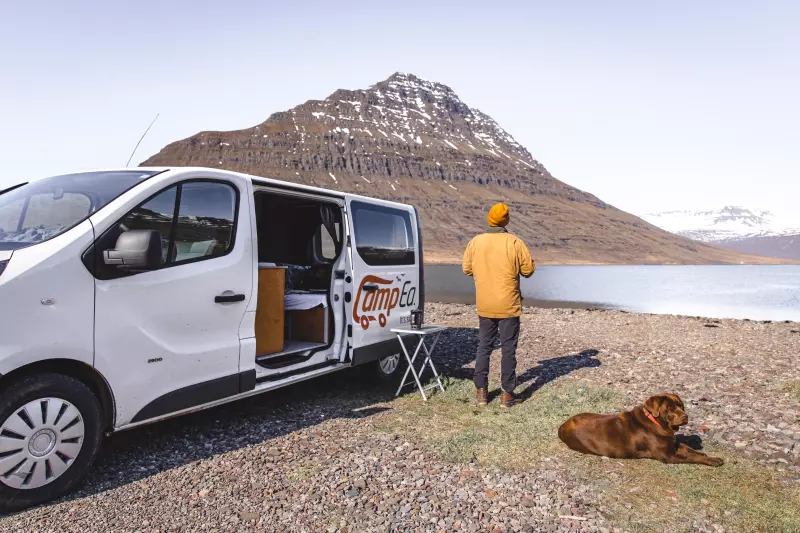
A breathtaking view

A breathtaking view

The months of June, July, and August are the most pleasant for camping in Iceland. Temperatures are warmer, and there is less rain, wind, and snow. Since these months correspond to the high season, campsites are often more crowded. The days are long, allowing for exploration of the country until late in the evening. Another significant advantage is that the majority of campsites are open.
During the months of April, May, and September, campsites are virtually empty. This is a good option to avoid crowds. However, weather conditions are more uncertain and the days are shorter.
6

Are campsites open in winter in Iceland?
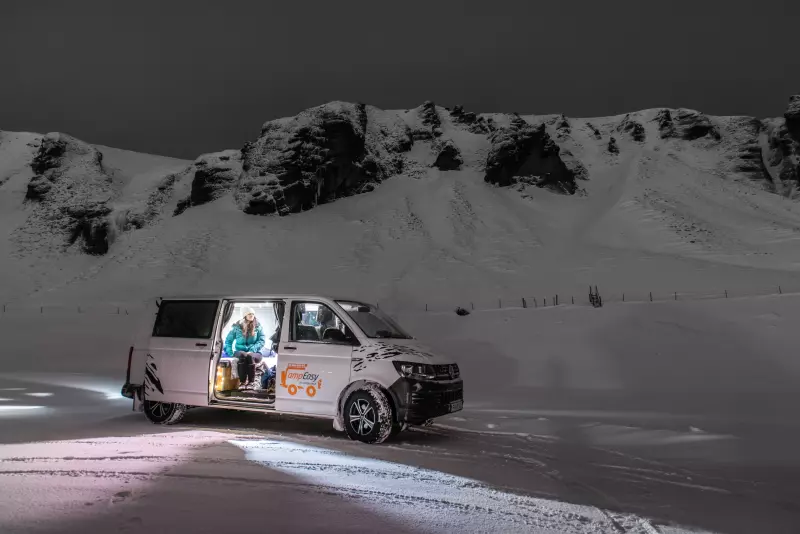
Camping in winter in Iceland

Camping in winter in Iceland

Iceland offers several campsites open year-round, allowing adventurers to discover the country under its winter coat.
Most campsites close from mid- to late-September and reopen in May/June.
Note that for campsites closed in winter, it is tolerated to park there for free overnight. No services will be offered.
The map below shows you the campsites open year-round.
Winter camping locations
Camping in Iceland in winter requires adequate preparation. Temperatures can be harsh, and weather conditions unpredictable.
Campers must therefore be well equipped with gear suitable for low temperatures and be ready to face sometimes extreme conditions. This includes wind-resistant tents, sleeping bags designed for cold weather, and insulating and waterproof clothing.
If you opt for a campervan, we strongly advise you to choose a vehicle with the Webasto heating option.
7

Is wild camping allowed in Iceland?

Wild camping is forbidden

Wild camping is forbidden

Since November 2015, Icelandic conservation legislation has been strengthened. It is now forbidden to spend the night in tents, caravans, campervans, or other similar vehicles outside organized campsites or urban areas, unless permission has been obtained from the owner or rights holder. (Aside from national parks and reserves, land is generally private.)
The majority of land in Iceland is private
For those traveling in a motorhome or campervan, it is mandatory to stay in registered campsites.
However, if you are traveling without a vehicle, wild camping is allowed in the three cases below. Everything is described in English on the governmental site of the ust.
Along public roads in inhabited areas, you may pitch a traditional camping tent for one night on uncultivated land, provided there is no campsite in the immediate vicinity and the landowner has not limited or prohibited access, passage, or stay in the area by means of signs on gates and hiking trails.
Along public roads, in uninhabited areas, you may pitch a traditional camping tent on private or national land.
Outside public roads, it is possible to pitch a traditional camping tent on private or national land, unless otherwise indicated in the special rules applicable to the area concerned.
Legislation is slightly more flexible in the Highlands where wild camping is tolerated provided you leave no trace.
This measure aims to protect Iceland's fragile environment against damage caused by unregulated camping.
8

What are the opening hours/periods for campsites in Iceland?

Most campsites welcome visitors from June 1st to the end of August, the period during which the climate is most favorable for camping.
However, some campsites may open earlier, around May 15th, and close mid-September, depending on their location and demand. Dates may vary, and it is advisable to check the specific information for each campsite.
You can arrive at any time, even very late at night. In this case, you will pay the next day or deposit the money in a mailbox if the owner is not around.
9

How much does a night of camping cost in Iceland?
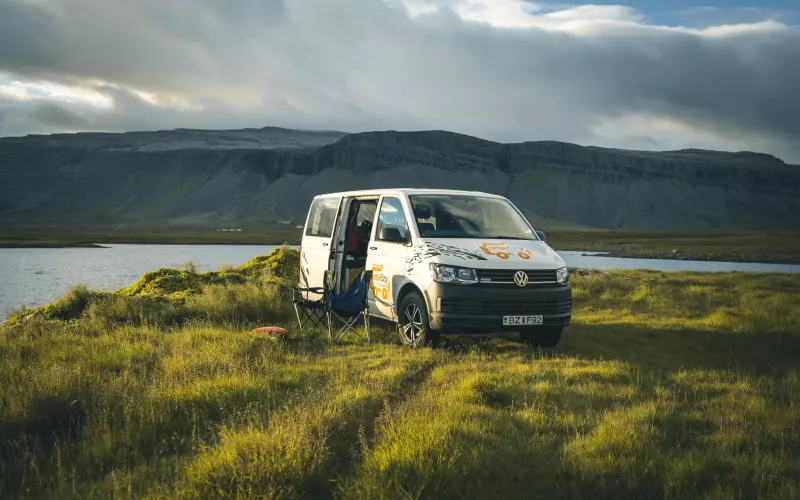
The campervan is a popular solution

The campervan is a popular solution

The cost of a night of camping in Iceland varies depending on several factors, such as location, services offered, and the season.
On average, the price is between 1,500 ISK and 2,500 ISK per person per night, which is equivalent to approximately $11.52 to $23.03 USD.
Some campsites may offer additional services like hot water, which may incur extra charges.
Even if the majority of campsites in Iceland accept card payments, it is advisable to have some cash on you for the most isolated sites or for taking a hot shower.
10

Do you need to book your spot at a campsite in Iceland?

Few campsites offer the possibility of booking in advance. Nevertheless, some now offer this option through the Parka.is application
If you are traveling in a campervan or motorhome during the high season, it is advisable to arrive before 7 p.m.. First come, first served.
For those camping or sleeping in their car, booking is not necessary, you will generally always find a spot available.
11

Where are the campsites located in Iceland?

Below is the map of campsites open in summer. Except in the center and on the southern portion between Skaftafell and Hofn, it will not be difficult to find a campsite.
The green tents correspond to campsites eligible with the Camping Card
Campsites in Iceland
The Tjalda.is website lists almost all the campsites with useful information such as available services.
12

What services are available?

Services may vary from site to site. In general, campers can expect to find basic facilities such as toilets, drinking water, and electrical outlets, often for an extra charge for motorhomes. Many campsites also offer showers, sanitary facilities, and some have restaurants or nearby shops to meet campers' needs.
Some sites offer additional services such as communal kitchens, children's play areas, washing machines, and even Wi-Fi.
Some sites may be more rudimentary, offering simply a pitch with controlled access without additional amenities.
For food, supermarkets and gas stations will be your resupply points.
13

Should you buy the Camping Card in Iceland?
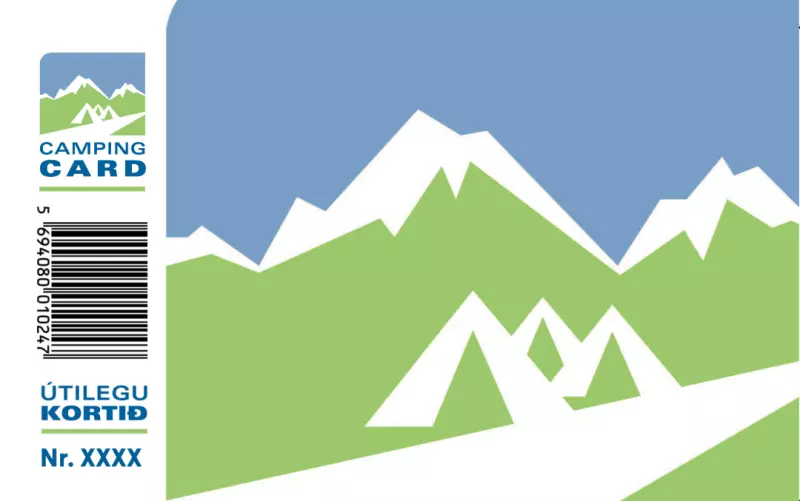
The Camping Card allows you to save money

The Camping Card allows you to save money

Purchasing the Camping Card can be considered an initial investment that can potentially offer significant savings, especially for families or groups. In terms of cost-benefit, the Camping Card can be particularly advantageous for those planning to spend multiple nights camping across Iceland. However, it is essential to consider the opening dates of the campsites, as not all of them are open year-round.
A night of camping costs about $17.27 USD. A couple camping 6 nights would spend about $207.28 USD (17.27 x 2 x 6).
For $206.13 USD, this card offers access to over 30 campsites across the country.
Valid for a family of two adults and up to four children under 16.
The card does not exempt you from the government tax: 333.00 ISK ($2.64 USD) per night for the group.
A couple with two children can only set up one tent.
The card is valid for 28 nights, where each night represents one unit deducted from the card.
The card is valid from May 1st or 15th until September 15th of the year. In other words, the card is useless in winter.
The campsites included in the program accept various types of accommodation, including tents, caravans, and motorhomes.
The card offers additional benefits such as discounts on fuel, food, drinks, and other products at certain partner gas stations.
Cardholders can stay up to four consecutive days at each participating campsite.
To use the card, simply present it with a valid ID upon arrival at the campsite. The card functions like a prepaid credit card, with a magnetic strip that deducts the nights used. If you opt for the digital version, the campsite owner will scan the QR Code on your smartphone.
Our opinion: depending on your itinerary, estimate the number of times you could use the card. If the savings made are not significant, it is better not to purchase the card, as the participating campsites are not always the best possible choices.
14

How to equip yourself for camping in Iceland?

The country's weather conditions require equipping yourself with suitable gear.
Warm and waterproof clothing
Inflatable sleeping pad/air mattress. The ground is often wet due to rain. An inflatable pad will insulate you from the ground.
Sleeping bag with a comfort temperature between -5°C and +5°C. (+5°C - +10°C for campervan nights)
Sleep mask. In summer, the night only lasts a few hours.
Earplugs against the noise of the wind, rain, waterfalls, or your neighbors.
Headlamp. Much more practical than your smartphone's flash as it allows you to have both hands free.
Stove and cooking utensils. Gas canisters can be bought almost everywhere and will be compatible with standard models from Primus or Campinggaz.
Waterproof and wind-resistant tent. Avoid entry-level tents. This is an investment that should not be overlooked. Wind gusts over 50km/h and heavy showers are frequent.
Microfiber towel for quick drying
Power bank / Solar panel
Toilet paper and a shovel to bury your waste during treks.
A water bottle. Water in Iceland is among the purest in the world.
A pair of flip-flops or sandals for the shower
15

Can you buy or rent camping equipment in Iceland?

Camping is part of Icelandic culture, so it's easy to find stores to equip yourself in major cities. In Reykjavik, specialized stores are in the city center or in commercial areas.
For renting items or accessories, the reference store is called Iceland-camping-equipment. You will find everything you need there.
Everything is more expensive in Iceland, buy your gear beforehand if possible
16

The best campsites in Iceland

Reykjavik Campsite is a popular choice, located not far from the city center and offering easy access to public transport. It is distinguished by its commitment to sustainability and its comfortable facilities.
Another site, Reykjamörk Campsite in Hveragerði, is located less than an hour from the capital and is renowned for its natural hot springs, offering a unique and relaxing camping experience.
For those looking for a more rustic experience, Skjól Camping, located near the famous Golden Circle, is an option worth considering.
Campsite 66.12 North, near Husavik in the northeast region, is also open in winter and benefits from excellent reviews for its tranquility and breathtaking views.
Planificateur de voyage Itinego

Did this guide help you?

No reviews yet
Tap a star to rate this guide

Got a question? Need advice?

Join our Facebook help group for the country

Share this guide